6 Side Effects of Chemo Nobody Told Me About
I want to be upfront about something: I am only highlighting six. There were so many more that are hard to quantify, and some that are frankly too much to put in one post.
This list focuses on the side effects that aren’t commonly discussed — the ones that blindsided me even after I’d done my research. Of course I experienced the ones everyone talks about: hair loss, insomnia, nausea. But these? These surprised me. And I think that matters.
If you’ve been through chemo, you’ll recognize these. If you haven’t, I hope this gives you something no pamphlet ever could — an honest picture of what to expect and the knowledge that you are not alone.
Bonus: I have pictures at the end you might find very interesting. :-)
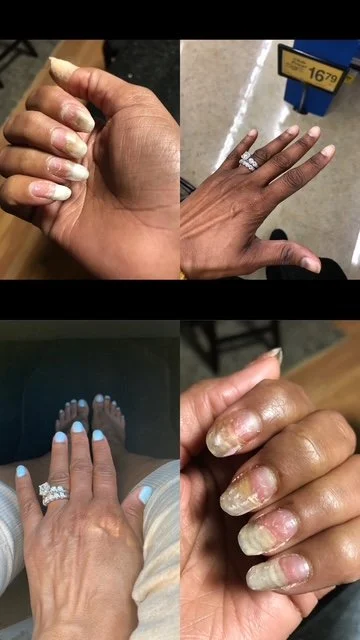
1. Darkened, Dehydrated Skin
I had done extensive research before starting treatment. I even connected with a 25-year-old woman in California who had the same cancer subtype and was on the same protocol. She was incredibly generous with her experience and helped me prepare for a lot of what was coming.
She didn’t mention this one. Partly, I think, because she wasn’t a Black woman and this particular side effect presents differently on deeper skin tones.
Midway through my chemical load, I started noticing changes. My skin was darkening and dehydrating in ways I couldn’t explain. It took an unexpected moment to make me fully see it. My nephew was in the hospital with some GI issues and I was at the grocery store. He asked me to find something gentle for him to eat and I sent him a photo — not realizing it was a close-up of my hand holding the item.
His immediate response: “What man’s hand is this?”
He and I have that kind of relationship. He wasn’t trying to hurt me. When I told him it was mine, he immediately apologized. And I laughed. But in that moment I started paying closer attention to what the chemo was doing to my skin — not just my hands but other parts of my body too.
Nobody warned me about this. But it was real, and it was visible, and it affected how I showed up in the world.
2. Nails Peeling Away From the Skin
One of the companies I had started before diagnosis was a natural oil company that included cuticle oil. So I was already using my own homemade formula throughout treatment. My nails actually grew quite long despite being weak and brittle.
And then they started separating from the nail bed.
It happened gradually. The nail would lift from the base, pulling further and further toward the cuticle until eventually — they just came off. Sometimes they popped off suddenly. I was left with nothing but the skin beneath for several months.
It was embarrassing in the way that all visible side effects are embarrassing — not because it was your fault, but because your body is no longer behaving like your body. I knew it would heal eventually. But sitting with it in the meantime, trying to shake someone’s hand or type a message or just exist in a professional setting — that was its own kind of hard.
3. Mouth Ulcers
I had never in my life experienced an ulcer of any kind. So when they appeared — not just in my mouth but throughout most of my throat — I was completely unprepared.
They burned. They made eating anything with flavor nearly impossible. I got to the point where I could only manage juice, applesauce, and cream of wheat. Not because I had no appetite — though that was also true for stretches — but because opening my mouth to eat meant opening a wound.
People going through chemo often lose their appetite for a number of reasons. But the ulcers added another layer. Swallowing was painful. Tasting was almost nonexistent. And the weight loss that followed was significant.
I want to say something important here for anyone currently in treatment: I know there are online communities that advocate fasting as a way to repair the immune system. There is real science behind that concept — but not when your body is in the middle of fighting a daily disease. You need calories to function. You need energy to survive the treatment itself. The steroids were already causing anxiety. Fasting on top of that made everything worse. Please eat. Whatever you can manage — eat it.
4. Moon Face
If you haven’t heard this term before, moon face is the swelling of your face, cheeks, and other parts of your body caused by steroid use during treatment. Your face becomes very round. Your eyelids puff. Your cheeks fill out in a way that doesn’t look or feel like yours.
Even if you are very thin, you retain fluid. The face in the mirror stops being the face you recognize. It took about three to four months after chemo ended for my face to return to normal.
Along with the moon face came significant weight gain — which makes complete sense because steroids increased my appetite dramatically, and that didn’t immediately stop when treatment ended. I want women to know this is coming so they don’t panic when it happens. It is not permanent. It does resolve. But while you’re in it, looking in the mirror and not recognizing yourself is one of the harder parts of the whole experience.
5. Bone Pain
When we think about pain, we think about nerves. Headaches. Muscle aches. We don’t typically think about our bones as a source of pain because we don’t often associate bones with nerves.
Bone pain is something else entirely. It feels like every bone in your body is throbbing simultaneously. A constant, deep ache that no medication fully touches. You can’t position yourself out of it. You just have to endure it.
What helped me get through it was understanding why it was happening. Chemotherapy attacks every cell in the body in order to break down tumors and stop the spread. Your immune system takes an enormous hit in that process. To offset this, many protocols include a drug called Neupogen, which forces the body to rebuild white blood cells. White blood cells are produced in the bones. So when you feel that bone pain, your body is literally being forced to manufacture the cells that will help you survive.
That knowledge didn’t eliminate the pain. But it made it tolerable. Every throb was my body fighting. I tried to hold onto that.
6. Extreme Mood Swings and Rage
I expected to feel sad. I expected fear and frustration and grief. I was not prepared for the agitation.
Small things would send me to the edge. My husband would try to bring me food out of pure kindness and I would be upset for reasons I couldn’t fully explain. I would come downstairs, see dishes in the sink, and feel rage that brought me to tears. People who reached out to me — people who cared about me and were trying to connect — got snapped at. I apologized to several of them afterward because I was genuinely not okay in those moments.
Part of it was the broader weight of everything: the diagnosis, the insomnia, the inability to taste food, the smells I suddenly couldn’t tolerate. Part of it was the steroids. Part of it was the accumulated stress of dismantling your life for treatment and hoping it works.
And part of it was just chemotherapy doing what chemotherapy does to the brain and the hormones and the nervous system. It was not fully in my control. But that didn’t make it easier to live with — for me or for the people around me.
If you are going through this and you feel unrecognizable in your own emotional responses — you are not losing your mind. This is a known, real, underdiscussed side effect. Give yourself grace. Ask the people around you to do the same.
Honorable Mention: Nose Hair
I debated including this one. But I think it’s important precisely because it’s the kind of thing that seems trivial and turns out to be deeply inconvenient.
I knew I was going to lose the hair on my head. My eyebrows. My eyelashes. Hair everywhere else. What I never thought about was my nose hair.
Our nose hairs exist for a reason. They filter what we inhale. They keep things out. When they fell out — and they did, a few weeks into my first infusion, I would wipe my nose and they would just come out on the tissue — I had a constantly runny nose for the duration of treatment. Everything I inhaled felt unfiltered. My throat dried out. I became a person who was never without a tissue.
It sounds small. It wasn’t. And nobody mentioned it.
I’m mentioning it now.
This Too Shall Pass
I kept a calendar on the refrigerator. Every day that passed, I crossed it off. One day closer to the other side of this. One day closer to rebuilding my life. One day closer to getting back to something resembling normal — to being present with my husband and my son.
That calendar kept me going.
I continued juicing throughout treatment. Ginger in any blend helped significantly with the nausea. Drinking a gallon of water a day helped flush the drugs and manage the GI side effects. And my homemade cuticle oil was one of the small acts of care I gave myself when everything else felt out of my control.
I’ll talk about brain fog in another post because it deserves its own space. But I want you to hear this: the body you have during treatment is not the body you will have on the other side of it. It rebuilds. Mine did. Yours will too.
The list of chemo side effects is longer than anyone tells you. But once you understand why they’re happening, you can stop being afraid of them — and start getting through them one day at a time.
If you found this helpful, share it with someone who needs it. And if you’re in the middle of treatment right now — I see you. Keep crossing off the days.